

Written by Travel Plans Marrakech — a Morocco-based travel and tourist transport agency.
Marrakech street food is more than a quick and affordable way to eat. It is one of the best introductions to the city’s culture, daily life and generous hospitality. In the Medina, food appears everywhere. Smoke rises from charcoal grills, fresh bread arrives from neighbourhood ovens and vendors pour steaming bowls of soup for customers gathered around small counters.
The experience changes throughout the day. In the morning, locals stop for warm msemen, harcha and mint tea. Around lunchtime, the scent of slow-roasted lamb fills the narrow lanes near Jemaa el-Fna. Then, as evening approaches, the main square becomes a vast open-air dining room.
However, finding the best local food requires more than walking toward the busiest stall. Some places focus mainly on visitors, while others continue to serve the dishes Marrakech residents enjoy every day. Knowing when to go, what to order and how to recognise a reliable vendor can make a significant difference.
This local guide explains where to find authentic Marrakech street food, from the famous stalls of Jemaa el-Fna to the smaller eateries of Derb Dabachi and Bab Doukkala. You will also discover the city’s essential dishes, typical prices, food-safety advice and practical tips for ordering.
Come hungry and stay curious. Some of the simplest dishes may become your favourite memories of Marrakech.
Discover the Heart of Marrakech
Explore the Medina’s history, culture and hidden corners on a private city tour.
Why Marrakech Street Food Is Part of the City’s Culture
Food in Marrakech is closely connected to neighbourhood life. Small stalls, bakeries and family-run eateries are not simply places to buy a meal. They are gathering points where workers, families, students and shopkeepers pause during the day.
Bread offers a clear example. Many Medina families still prepare dough at home and take it to a communal neighbourhood oven. The baker cooks each loaf and keeps track of which bread belongs to each household. Meanwhile, large clay jars of tanjia may cook slowly beside the oven’s warm embers.
This connection between food and public life becomes especially visible in Jemaa el-Fna. UNESCO recognises the square as an important cultural space where food stalls exist alongside musicians, storytellers, performers and traditional craftspeople. Therefore, eating there is not only about the meal. It is also about experiencing a living part of Marrakech’s heritage.
Marrakech street food also reflects the practical side of Moroccan cooking. Many dishes use simple ingredients, patient preparation and balanced spices. Harira combines tomatoes, chickpeas and lentils. Mechoui transforms slow-roasted lamb into exceptionally tender meat. Sfenj uses basic dough to create a warm, airy Moroccan doughnut.
Not every local dish needs an elaborate presentation. Often, the atmosphere, freshness and people around you make the experience memorable.
Discover More of Marrakech
From Jemaa el-Fna to historic palaces and colourful souks, explore the city’s must-see attractions.
Where to Find the Best Marrakech Street Food
The best area depends on what you want to eat and when you plan to visit. Jemaa el-Fna is ideal for atmosphere, while Mechoui Alley is better for a focused lamb lunch. Derb Dabachi offers quick snacks, sandwiches and fruit drinks.
Area | Best time | What to try | Atmosphere |
Jemaa el-Fna | After sunset | Harira, brochettes, snails and juice | Busy and theatrical |
Mechoui Alley | Late morning or lunch | Mechoui and tanjia | Traditional and focused |
Derb Dabachi | Late afternoon and evening | Sandwiches, msemen and smoothies | Lively and local |
Bab Doukkala | Morning and lunchtime | Soups, bread and simple dishes | Everyday neighbourhood life |
The Mellah | Morning and afternoon | Olives, spices and market snacks | Historic and colourful |
Jemaa el-Fna After Sunset
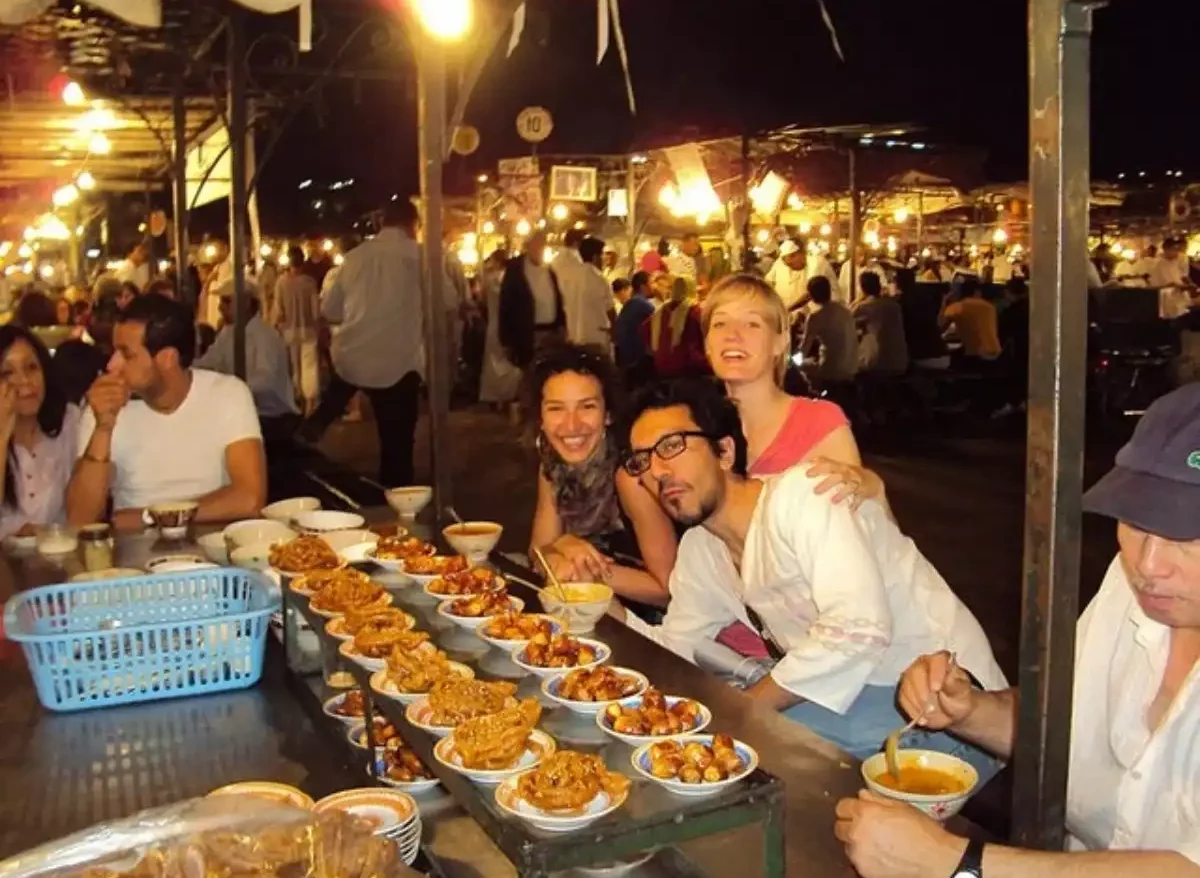
Jemaa el-Fna is the most famous place to experience street food in Marrakech. During the day, the square has juice vendors, small carts and market activity. However, its character changes before sunset.
Food stalls begin setting up their benches, grills and large cooking pots. Soon, the square fills with the smell of grilled meat, spices and soup. According to Morocco’s official tourism website, Jemaa el-Fna becomes a huge open-air restaurant after dark, serving dishes such as harira, tanjia and lentils.
Visit Jemaa el-Fna for the atmosphere as much as the food. Walk around before choosing a stall. Compare the displayed menus and look for places where both residents and visitors are eating.
A busy stall usually has faster ingredient turnover. In addition, you can watch the food being prepared. Choose meat that goes directly from the grill to your plate and soup served from a steaming pot.
Mechoui Alley for Slow-Roasted Lamb
Mechoui Alley is located in the Medina, close to the northern side of Jemaa el-Fna. It specialises in one of Morocco’s most memorable meat dishes: whole lamb roasted slowly until it becomes tender.
The meat is normally sold by weight and served simply with bread, salt and cumin. It does not need a heavy sauce because the slow cooking creates its distinctive flavour and texture.
This area is also a good place to look for tanjia Marrakchia. Unlike a tagine, tanjia takes its name from the tall clay jar used to prepare it. Meat, preserved lemon, garlic, cumin and other seasonings cook together slowly for several hours.
Mechoui Alley works best as a lunch stop. Arrive before the late afternoon because the most popular vendors may sell out once the day’s lamb is gone.
Derb Dabachi for Quick Local Bites
Derb Dabachi is one of the lively streets leading away from Jemaa el-Fna. It is a useful place for travellers who want casual local food without sitting down for a complete meal.
Here, you may find small grilled-meat sandwiches, fried potato cakes, Moroccan pancakes, fruit drinks and simple neighbourhood cafés. Many items are prepared quickly and eaten while standing or sitting at a small counter.
Derb Dabachi becomes particularly animated in the late afternoon and evening. It can feel chaotic at first, yet that energy is part of its character. Walk slowly, watch where residents stop and choose food prepared in front of you.
Prices are often lower than those charged in the busiest parts of the main square. Nevertheless, always confirm the price before ordering.
Bab Doukkala for an Everyday Local Experience
Bab Doukkala provides a different view of Marrakech street food. This part of the city is less focused on sightseeing and more connected to daily shopping and neighbourhood life.
The market area contains vegetable sellers, butchers, bakeries and small eateries. Depending on the hour, you may find harira, bissara, lentils, grilled meat, fresh bread and seasonal fruit.
Visit in the morning or around lunchtime. Instead of searching for a famous stall number, observe which places have regular local customers. A short queue is often a good sign.
Bab Doukkala is also an interesting starting point for walking deeper into the Medina. However, its streets can become busy, so remain aware of bicycles, scooters and delivery carts.
The Mellah for Olives, Spices and Market Flavours
The Mellah, Marrakech’s historic Jewish quarter, is known for its markets and spice shops. It is not a single street-food destination. Instead, it is a good place to taste small products while exploring the neighbourhood.
Look for colourful displays of olives, preserved lemons, pickled vegetables, dates and dried fruit. You may also find juice stalls, bakeries and small restaurants serving uncomplicated Moroccan food.
The Mellah is close to Bahia Palace and the Place des Ferblantiers. Therefore, it fits easily into a cultural itinerary through southern Marrakech.
15 Marrakech Street Food Dishes You Should Try
Marrakech offers food for different tastes and levels of culinary curiosity. You do not need to try everything in one evening. Instead, select a few savoury dishes, leave room for something sweet and return another day for the rest.
1. Tanjia Marrakchia
Tanjia is the signature dish of Marrakech. Beef or lamb cooks slowly in a tall clay jar with preserved lemon, garlic, cumin, saffron or other seasonings.
The result is tender, deeply flavoured meat with a rich cooking sauce. Tanjia is ideal for sharing with Moroccan bread. Look for it near Mechoui Alley or in small traditional eateries around the Medina.
2. Mechoui
Mechoui is lamb roasted slowly in a traditional oven. The meat becomes tender enough to separate easily from the bone.
It is usually sold by weight and served with bread, cumin and salt. For the most complete experience, try it around lunchtime in Mechoui Alley.
3. Harira
Harira is a comforting Moroccan soup commonly prepared with tomatoes, lentils, chickpeas, herbs and vermicelli. Recipes vary, and some versions contain meat.
Moroccans often enjoy harira during Ramadan, accompanied by dates and chebakia. However, it is available throughout much of the year in Marrakech.
4. Brochettes
The smoke rising above Jemaa el-Fna often comes from rows of brochettes cooking over charcoal. These skewers may contain chicken, beef, lamb, liver or kefta.
Order directly from the menu and ask for the meat to be cooked thoroughly. Vendors usually serve brochettes with bread, tomato sauce or a small salad.
5. Kefta
Kefta consists of minced meat mixed with herbs and spices. It may be grilled on skewers, cooked with tomato and eggs, or placed inside a sandwich.
A freshly grilled kefta sandwich makes a convenient meal while exploring the Medina. Add a little harissa only if you enjoy spicy food.
6. Maakouda
Maakouda are seasoned potato cakes with a crisp exterior and soft centre. Vendors may serve them alone or inside bread with tomato, sauce and vegetables.
They are inexpensive, filling and suitable for travellers who prefer a break from meat. However, frying oil and preparation surfaces may be shared with other foods.
7. Babbouche
Babbouche is Moroccan snail soup. The snails cook in a fragrant broth containing a distinctive blend of herbs and spices.
Vendors serve them in a small bowl with a toothpick. After eating the snails, some customers drink the warm broth. It is one of the more adventurous dishes found around Jemaa el-Fna.
8. Msemen
Msemen is a square, layered Moroccan flatbread cooked on a hot griddle. It can be served plain with honey, cheese or amlou. Savoury versions may contain onions, herbs and spices.
Try it freshly prepared because the crisp edges and soft interior are best while warm.
9. Harcha
Harcha is a semolina flatbread with a crumbly texture. It is commonly eaten at breakfast or as an afternoon snack.
It pairs well with honey, soft cheese, olive oil or mint tea. Small bakeries and griddle stalls often sell it alongside msemen.
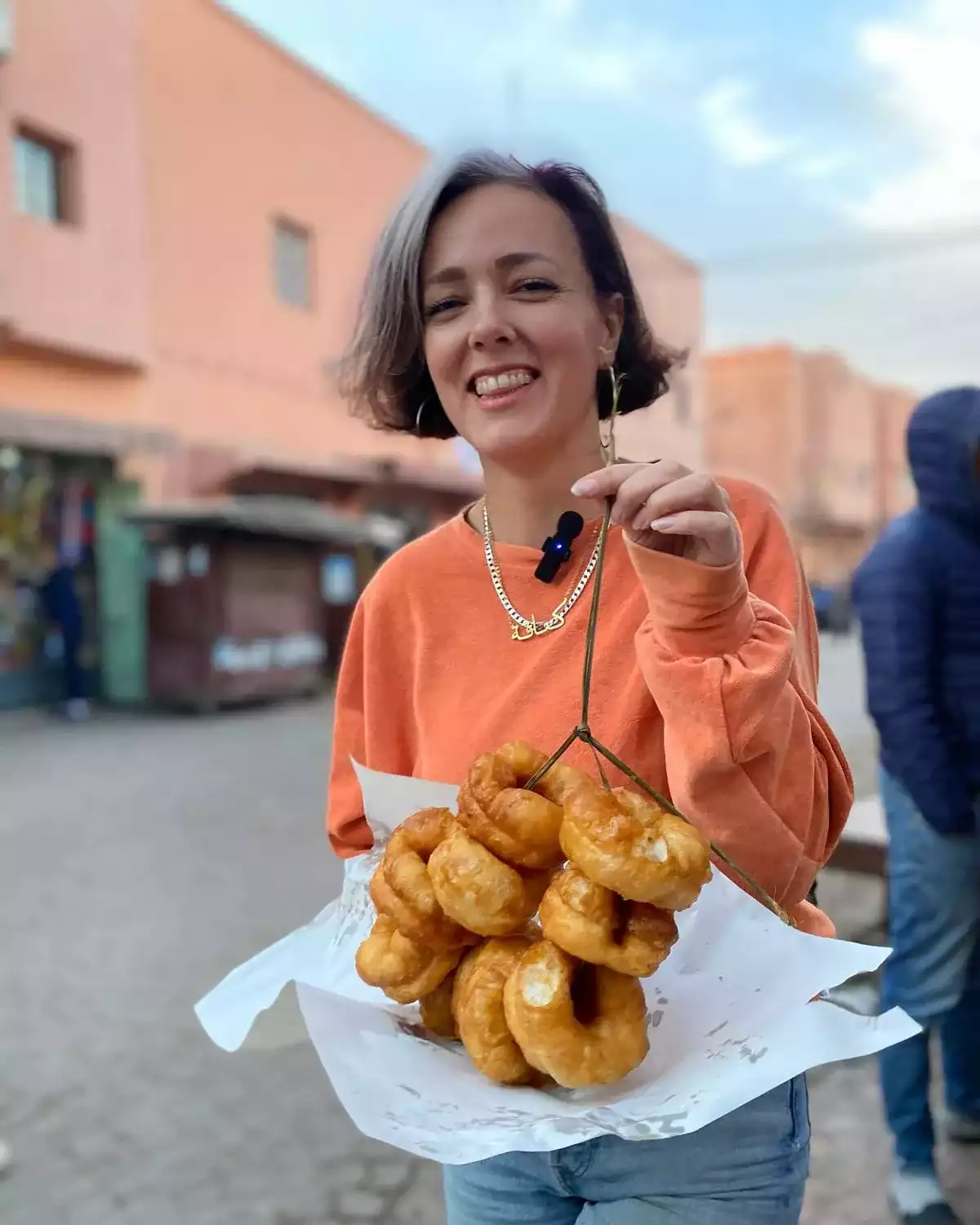
10. Sfenj
Sfenj is Morocco’s answer to a doughnut. The dough is shaped by hand and fried until the outside becomes golden while the centre remains light and airy.
It is best eaten immediately. Some people enjoy it plain, while others add sugar. Pair it with mint tea for a simple local breakfast.
11. Bissara
Bissara is a thick soup or purée generally made from dried fava beans or split peas. Vendors often finish it with olive oil, cumin and paprika.
It is warming, affordable and filling. Although the basic recipe can be plant-based, travellers should ask whether meat stock or butter has been added.
12. Khlii and Eggs
Khlii is preserved Moroccan meat seasoned with spices and stored in fat. It has an intense, salty flavour and is often cooked with eggs.
You may find it in a breakfast omelette or inside a warm sandwich. It is particularly satisfying during the cooler months.
13. Chebakia
Chebakia is a flower-shaped pastry fried and coated with honey, orange blossom water and sesame seeds. Its sweetness contrasts beautifully with a bowl of savoury harira.
Although closely associated with Ramadan, many pastry shops sell it at other times of the year.
14. Olives and Preserved Vegetables
Marrakech’s market stalls display olives in shades of green, purple and black. They may be flavoured with herbs, chilli, garlic or preserved lemon.
Ask before tasting and confirm the price if you want to purchase a larger quantity. The Mellah and Medina markets offer plenty of choice.
15. Fresh Orange Juice
Fresh orange juice provides a refreshing pause between the souks and food stalls. Vendors prepare it throughout Jemaa el-Fna and other busy areas.
Choose a vendor who squeezes the fruit in front of you. If you do not want added sugar, simply request the juice without it.
Taste the Flavours of Morocco
Discover tagine, couscous, pastilla and other traditional dishes in our complete Moroccan food guide.
How Much Does Street Food Cost in Marrakech?
Marrakech street food is generally affordable, especially outside the most visited areas. Nevertheless, prices change according to location, portion size, season and ingredients.
The following amounts are only practical estimates. Always check the displayed menu or ask for the price before ordering.
Food or drink | Typical indicative range |
Orange juice | 8–20 MAD |
Sfenj, harcha or plain msemen | 3–20 MAD |
Harira or babbouche | 10–30 MAD |
Maakouda or a small sandwich | 15–35 MAD |
Brochettes or a mixed grill plate | 25–100 MAD |
Tanjia or mechoui | 60–150+ MAD |
Simple street-food meal | 60–150 MAD per person |
Prices around Jemaa el-Fna may be higher than those in neighbourhood streets. In addition, bread, salads or small side dishes are not always complimentary.
Before sitting down, point to the exact item you want and confirm the quantity. Ask whether bread and side dishes are included. This simple habit prevents confusion when the bill arrives.
Carry small Moroccan dirham notes and coins. Many traditional stalls accept cash only, and paying with the correct amount makes the experience easier.
Is Marrakech Street Food Safe?
Many visitors eat street food in Marrakech without experiencing problems. However, no outdoor stall or restaurant can offer zero risk. Careful choices are especially important for young children, pregnant travellers, older visitors and anyone with a sensitive stomach.
Start by looking for a busy stall with steady customer turnover. Food should be cooked in front of you and served hot. Avoid meat, seafood or cooked dishes that have been sitting at room temperature for a long period.
The World Health Organization recommends keeping food clean, cooking it thoroughly, maintaining safe temperatures and using safe water and ingredients. Travellers can apply these principles by choosing freshly cooked food and avoiding items that appear poorly stored.
Follow these practical precautions:
- Choose food cooked to order and served steaming hot.
- Ask for meat and eggs to be cooked thoroughly.
- Avoid raw garnishes if you are unsure how they were washed.
- Check that plates, glasses and preparation areas look clean.
- Drink sealed bottled water when uncertain about the source.
- Wash or sanitise your hands before eating.
- Avoid a stall if the smell, storage or hygiene worries you.
- Introduce rich or unfamiliar dishes gradually.
A crowd can indicate fast turnover, but it is not a complete safety guarantee. Use your own judgement. If you have serious allergies, explain them clearly and remember that cross-contact can happen in small kitchens.
Taste Your Way Through Marrakech
Explore local markets, hidden eateries and authentic Moroccan flavours with our guide to Marrakech food tours.
Vegetarian, Vegan and Gluten-Free Street Food Options
Vegetarian travellers can enjoy several Marrakech street food options. Plain msemen, harcha, sfenj, maakouda, olives and many vegetable dishes may be suitable.
Still, it is important to ask questions. Harira can contain meat, while breads and pancakes may include butter. Vegetable tagines may share cookware with meat dishes.
Vegan travellers should confirm that a dish contains no meat, meat stock, butter, milk or eggs. Helpful phrases include “bla lham” for no meat, “bla djaj” for no chicken and “bla zibda” for no butter. However, showing a translated allergy or dietary card is more reliable for complex requirements.
Gluten-free dining needs additional care. Grilled meat, olives, fruit and some soups may not contain gluten as a main ingredient. Yet bread is handled throughout many stalls, and soups can include flour or vermicelli. Therefore, people with coeliac disease should not rely on appearance alone.
For severe allergies or medical diets, choose an established restaurant or a pre-arranged experience where your requirements can be discussed in advance.
The Best Time to Explore Marrakech Street Food
There is no single perfect hour because each part of Marrakech follows a different rhythm.
Morning is ideal for sfenj, msemen, harcha and fresh juice. These foods make a simple breakfast before visiting the souks or historical monuments.
Late morning and lunchtime are best for Mechoui Alley. Arriving early gives you a better chance of finding the day’s slow-roasted lamb before popular vendors sell out.
Derb Dabachi becomes lively in the late afternoon. This is a good moment for sandwiches, potato cakes, pancakes and fruit drinks.
Finally, Jemaa el-Fna reaches its most atmospheric period after sunset. The grills are hot, the stalls are active and the square fills with residents, travellers, musicians and performers. From roughly 6:30 p.m. onward, it feels like an open-air theatre.
During Ramadan, opening patterns can change. Many vendors prepare for iftar before sunset, and the city becomes especially active later in the evening. Plan patiently and respect those who are fasting.
Cook Like a Local in Marrakech
Learn how to prepare authentic Moroccan dishes with local experts in a hands-on cooking class.
A Simple Marrakech Street Food Evening Route
Begin around 5:00 p.m. with a walk through Derb Dabachi. Try a small maakouda sandwich or freshly prepared msemen. Keep the portion modest because several more dishes await.
Continue toward the central Medina and browse the market lanes. Stop for olives, dates or a seasonal fruit drink. This part of the walk allows you to observe daily life before the evening crowds become dense.
Reach Jemaa el-Fna shortly before sunset. Watching the food stalls set up is part of the experience. Take a moment to see the square from a terrace, then return to ground level as the grills begin cooking.
Start dinner with a bowl of harira. Next, share brochettes, kefta or tanjia. Adventurous travellers can add babbouche. Finish with chebakia, sfenj or mint tea.
This route works best when you taste small portions rather than ordering a complete meal at the first stop. It also gives you time to compare stalls and enjoy the atmosphere.
If navigating the Medina feels overwhelming, consider exploring with a knowledgeable local guide. A guide can explain unfamiliar foods, communicate dietary restrictions and introduce the cultural stories behind each dish.
Independent Exploring or a Guided Food Experience?
Independent exploring gives you freedom. You can stop whenever something looks interesting, control your budget and return to your favourite area. It suits confident travellers who enjoy navigating busy markets.
However, a guided experience offers context. Many visitors can recognise a tagine, but fewer understand how tanjia connects to Marrakech’s communal ovens or why harira is served with dates and chebakia during Ramadan.
A local guide can also take you beyond the most obvious stalls. This is useful if you have limited time or feel uncertain about ordering. In addition, the guide can help confirm prices and explain basic dietary needs.
A cooking class offers another approach. Instead of only tasting the final dish, you learn how Moroccan ingredients, spices and techniques work together. Some experiences include a market visit before the lesson.
Plan Your Marrakech Experience
Let our local team create a personalised journey filled with authentic experiences, culture and unforgettable moments.
Final Thoughts:
Taste Marrakech One Bite at a Time
The best Marrakech street food experience does not require an exact checklist. It begins with curiosity, a little patience and the willingness to watch how the city eats.
Start with familiar flavours such as grilled brochettes, warm msemen or fresh orange juice. Then, if you feel adventurous, continue with tanjia, slow-roasted mechoui or a bowl of spiced snails.
Jemaa el-Fna deserves a place in every first visit because its evening transformation is unique. Nevertheless, do not stop at the main square. Derb Dabachi, Bab Doukkala, the Mellah and the smaller Medina lanes reveal a quieter and more everyday side of Marrakech’s food culture.
Choose busy vendors, order food freshly cooked and confirm prices before sitting down. More importantly, take your time. Street food is not simply fuel between monuments. It is an opportunity to observe local routines, speak with vendors and discover how much flavour can come from a few carefully prepared ingredients.
Travel Plans Marrakech can help you combine the city’s food, history and hidden corners within a personalised itinerary. We can also arrange private transportation for a comfortable arrival and an easy start to your stay.
FAQ's
About Marrakech Street Food
What street food is Marrakech famous for?
Marrakech is particularly famous for tanjia Marrakchia, slow-roasted mechoui, harira, grilled brochettes, babbouche, msemen and sfenj. Tanjia has the strongest connection to the city and is one of the most important dishes for first-time visitors to try.
Where can I find the best street food in Marrakech?
The main areas are Jemaa el-Fna, Mechoui Alley, Derb Dabachi, Bab Doukkala and the Mellah. Visit Mechoui Alley for lunch, Derb Dabachi in the late afternoon and Jemaa el-Fna after sunset.
How much should I budget for street food in Marrakech?
A simple street-food meal may cost approximately 60–150 MAD per person. Small snacks can cost considerably less, while large portions of meat may cost more. Prices vary, so check the menu and confirm what is included before ordering.
Is there vegetarian street food in Marrakech?
Yes. Possible choices include maakouda, msemen, harcha, sfenj, olives and some soups or vegetable dishes. However, recipes vary. Always ask whether the food contains meat stock, butter or eggs.
What is the best time to visit the Jemaa el-Fna food stalls?
Arrive shortly before sunset to watch the square transform. Most stalls become active during the early evening, while the liveliest atmosphere usually continues later into the night.
Get In Touch
Error: Contact form not found.
Contact Us
Phone / Fax: +212 5 24 32 66 88
Mobile: +212 6 08 85 10 10
Whatsapp: +212 6 08 87 20 20
Email: travelplansmarrakech@gmail.com
Opening Hours
Mon - Sat: 9.00 am - 8.00 pm
Sunday: 9.00 am - 6.00 pm
Our Office
13 bis talaint ain itti nakhil nord، 40060 Marrakech



 EN
EN FR
FR ES
ES IT
IT