
By Travel Plans Marrakech – Local Travel Experts in Morocco
Last updated: July 2026
Morocco is a country of contrasts. In a single journey, you can explore lively medinas, cross the Atlas Mountains, walk beside the Atlantic Ocean, and spend a night near the dunes of the Sahara.
However, travelling around Morocco can feel unfamiliar at first. How should you move between cities? Do you need cash? What should you wear? What is the best way to travel between cities? How much time should you allow for each destination?
These Morocco travel tips will help you prepare without removing the sense of discovery that makes the country so special. They are based on practical local experience and cover the details that first-time visitors often wish they had known earlier.
Here are 15 important things to know before travelling to Morocco in 2026.
Planning your first trip to Morocco? Let our local experts create a tailor-made journey with private transport and carefully selected experiences.
1. Choose the Right Time for Your Trip
Morocco can be visited throughout the year, but the best period depends on your itinerary.
Spring and autumn generally offer comfortable temperatures for visiting Marrakech, Fes, Essaouira, the Atlas Mountains, and the desert regions. Summer can be very hot inland, especially in Marrakech, Ouarzazate and southern Morocco.
Coastal destinations such as Essaouira, Agadir and Taghazout are usually cooler. Winter is pleasant in many cities, although mornings and evenings can feel cold. Snow and low temperatures are also possible in the mountains.
Do not pack for Morocco as though the entire country has the same climate. Check the forecast for every region on your itinerary and bring layers, particularly when travelling between the coast, the mountains and the desert.
2. Check the Entry Rules for Your Nationality
Visa and passport requirements depend on your nationality, the reason for your visit and the length of your stay.
For example, British tourists can currently visit Morocco without a visa for up to 90 days. However, this does not apply automatically to every nationality. Travellers should always verify the latest requirements with an official Moroccan consulate or their own government before departure.
Make sure your passport is valid for your trip and check that it has been stamped when you enter the country. Keep a digital copy of your passport, travel insurance and important reservations somewhere secure.
Entry requirements can change, so avoid relying only on old blogs or social media posts.
Planning a multi-city journey? Travel comfortably with a private vehicle and a professional local driver.
3. Choose the Right Way to Get Around Morocco
Trains are convenient for journeys between cities such as Tangier, Rabat, Casablanca, Fes and Marrakech. ONCF operates Morocco’s railway network, including the Al Boraq high-speed service. Tickets and schedules are available through the official ONCF website and mobile application.
Long-distance buses connect many cities and destinations that are not served by trains. Within larger cities, travellers can use taxis, buses and, in Casablanca and Rabat, trams.
A private vehicle with a professional driver is often more convenient for families, small groups, travellers with luggage and itineraries involving mountain villages, kasbahs or desert destinations.
It also allows you to stop for photographs, meals and sightseeing without depending on fixed schedules.
4. Do Not Try to Visit the Whole Country Too Quickly
Morocco looks compact on a map, but travelling between its major destinations can take longer than expected.
Marrakech, Casablanca, Rabat, Fes, Chefchaouen, Essaouira and Merzouga are spread across different regions. Trying to include all of them in one short holiday can mean spending more time on the road than enjoying each destination.
For a one-week trip, focus on one or two regions. You could combine Marrakech with Essaouira and the Atlas Mountains, or visit Casablanca, Rabat and Fes.
Allow at least three days when travelling from Marrakech to the Merzouga Desert. A slower four-day journey is more comfortable because it leaves time for the kasbahs, valleys and villages along the route.
A realistic itinerary will give you better memories than a long checklist of rushed stops.
Start your holiday without stress by reserving a private Morocco airport transfer.
5. Arrange Your Airport Transfer Before Arrival
Arriving in a new country can feel confusing, particularly after a late flight.
Booking your airport transfer in advance means that a driver can meet you at the terminal, assist with your luggage and take you directly to your hotel or riad.
This is particularly useful in Marrakech, where many accommodations are located inside or close to the Medina. Vehicles cannot reach every narrow street, so your driver may need to coordinate the closest accessible meeting point with your accommodation.
Before travelling, confirm:
- Your flight number and arrival time
- The name of your airport
- Your accommodation’s complete address
- The driver’s meeting point
- A telephone or WhatsApp contact
A little preparation can make your first hour in Morocco much easier.
6. Keep Some Moroccan Dirhams With You
The Moroccan dirham is the local currency.
Cards are accepted in many hotels, restaurants and established shops, especially in major cities. However, cash remains useful for taxis, small cafés, local markets, tips and purchases in rural areas.
ATMs are widely available in cities, but it is sensible to withdraw money before travelling into the mountains or desert. Carry smaller notes whenever possible, as taxi drivers and small businesses may not always have change for large notes.
Avoid exchanging all your money at the airport without comparing rates. Banks, official exchange offices and some hotels also provide currency exchange services.
Tell your bank that you are travelling and check whether your card provider charges international withdrawal or payment fees.
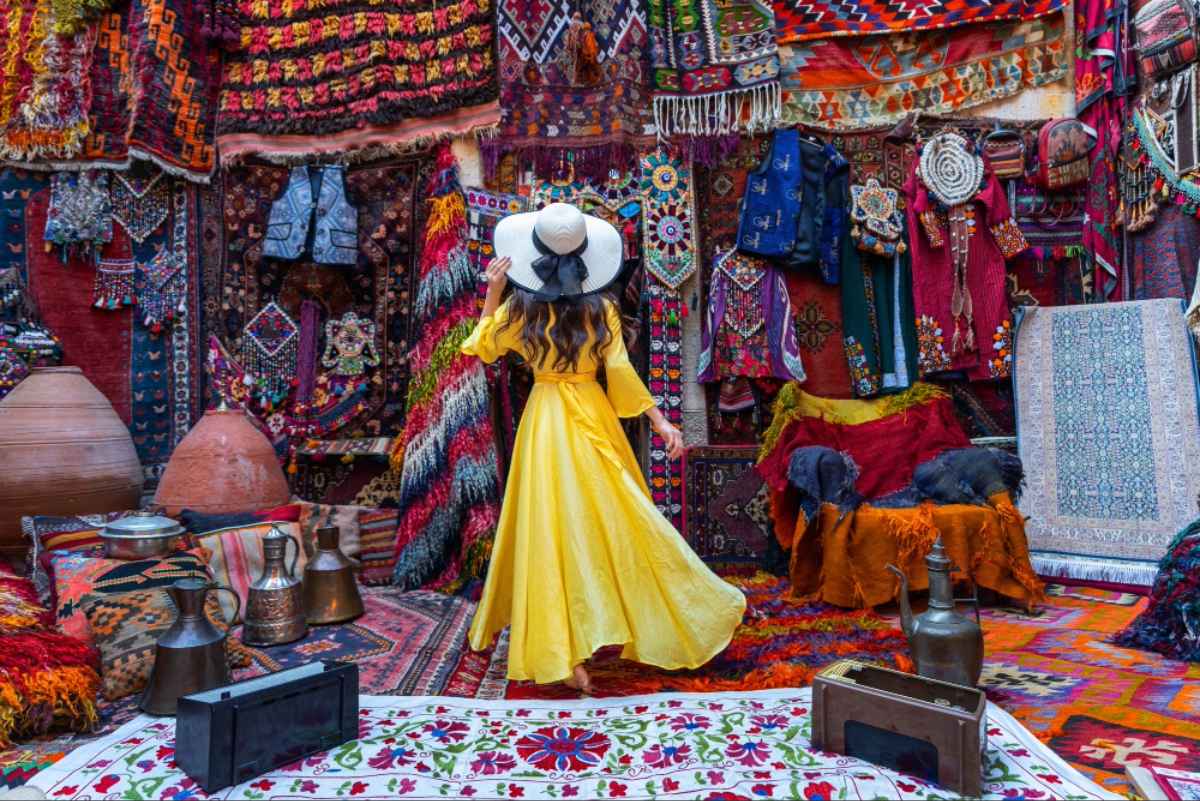
Discover Marrakech’s history, hidden streets, and traditional souks with a professional local guide.
7. Explore the Medinas With a Local Guide
Morocco’s historic medinas are fascinating, but they can also feel confusing during a first visit. Their narrow streets, hidden courtyards and busy souks are part of the experience, yet it is easy to miss important monuments or spend too much time trying to find your way.
A professional local guide can help you understand the history, architecture and traditions behind the places you visit. In cities such as Marrakech and Fes, a guided tour can include historic palaces, traditional neighbourhoods, artisan workshops and local markets.
A guide can also explain shopping customs, introduce you to trusted artisans and help you experience the Medina beyond its busiest tourist streets.
You do not need a guide for every day of your holiday. However, booking one for your first morning in a historic city can help you feel more confident during the rest of your stay.
8. Dress for the Weather and the Situation
There is no single dress code for tourists in Morocco, but comfortable and respectful clothing will help you feel more at ease.
Lightweight clothes are suitable for warm days. Loose trousers, longer skirts, shirts and dresses that cover the shoulders are practical choices for medinas, villages and religious areas.
Bring a hat, sunglasses and sun protection, even outside the summer season. Comfortable walking shoes are essential because medinas often have uneven streets.
You will also need a jacket or warm layer for winter evenings, mountain excursions and desert camps. Temperatures can drop significantly after sunset.
Some luxury hotels and restaurants may have a smarter dress code, while swimwear should generally be kept for pools and beaches.
Need help planning your visit? Contact our local team for a tailor-made itinerary, private transport, and guided experiences across Morocco.
9. Learn a Few Local Words
Arabic and Amazigh are Morocco’s official languages. French is also widely spoken, particularly in cities, hotels and tourism businesses. Spanish is common in parts of northern Morocco, while English is increasingly used in popular destinations.
You do not need to speak Arabic to travel around Morocco, but learning a few words is always appreciated:
- Salam – Hello
- Shukran – Thank you
- Afak – Please
- Bslama – Goodbye
- La, shukran – No, thank you
A friendly greeting can make everyday interactions warmer. It is also respectful to greet shopkeepers or restaurant staff before immediately asking a question.
Translation applications can be helpful, but download the required language before travelling in case you temporarily lose internet access.
10. Enjoy Moroccan Food Without Rushing
Food is one of the best parts of travelling in Morocco.
Tagine and couscous are the most famous dishes, but Moroccan cuisine includes much more. Try harira soup, pastilla, tanjia in Marrakech, grilled meats, fresh seafood on the coast, Moroccan salads and traditional pastries.
Couscous is commonly associated with Friday family meals, while tagine can be prepared with meat, vegetables, dried fruit or fish.
Choose restaurants that are busy and appear clean. When trying street food, look for stalls with a steady flow of local customers and freshly prepared dishes.
Drink bottled or properly filtered water when you are unsure about the local supply. Travellers with allergies or dietary restrictions should explain their needs clearly, as some ingredients may not appear on the menu.
A Moroccan cooking class is also a good way to understand the spices, ingredients and traditions behind the dishes.
Discover Moroccan culture through its flavours during an authentic cooking experience in Marrakech.
11. Expect to Bargain in the Souks
Bargaining is part of the shopping experience in many Moroccan souks, particularly for crafts, leather products, lanterns, rugs, ceramics and souvenirs.
Ask for the price politely and make a reasonable counteroffer. The discussion should remain friendly rather than confrontational. You are not obliged to buy something simply because you asked about it.
Before negotiating, decide how much the product is worth to you. Comparing prices in several shops can also help you understand the usual range.
Some boutiques, cooperatives and modern stores have fixed prices. In these places, bargaining may not be appropriate.
Take your time and buy objects you genuinely like. The best souvenir is not necessarily the item purchased at the lowest possible price.
12. Use Normal Safety Precautions
Morocco welcomes millions of visitors, but travellers should still use the same precautions they would use in any busy destination.
Keep your valuables secure in crowded medinas, transport stations and markets. Avoid displaying large amounts of cash, and do not leave phones or bags unattended.
Be cautious when strangers offer unsolicited directions, particularly in complicated Medina streets. Some people may later request payment. When you need help, ask your accommodation, an official guide, a police officer or a shopkeeper.
Government travel advice can change. In July 2026, the United States advises travellers to exercise increased caution in Morocco, while the UK also maintains regularly updated safety, legal and regional guidance. Review the current advice before departure rather than relying on outdated information.
Comprehensive travel insurance is strongly recommended.
Explore Marrakech’s souks with confidence on a private city tour with a professional local guide who can help you understand prices, traditions, and the art of bargaining.
13. Stay Connected With a Local SIM or eSIM
Wi-Fi is available in most hotels, riads, cafés and restaurants, but having mobile internet makes travelling easier.
It allows you to contact your driver, check maps, translate words and communicate with your accommodation. Visitors can purchase a local SIM card at airports and authorised shops, or arrange a compatible eSIM before travelling.
Check that your phone is unlocked before buying a local SIM. Ask the seller to activate the card and confirm that mobile data is working before leaving the shop.
Download important documents and offline maps in advance. Internet coverage is generally reliable in cities, but it may be less consistent in remote mountain areas and parts of the desert.
14. Allow Extra Time for Road Journeys
Driving distances in Morocco can be misleading.
A journey may look short in kilometres but take longer because of mountain roads, traffic, construction, weather conditions or sightseeing stops.
The road between Marrakech and Ouarzazate crosses the High Atlas Mountains, while desert routes include long sections where regular breaks are important.
Avoid planning major road journeys immediately before an international flight. Leave enough time for delays and consider spending your final night closer to the departure airport.
When travelling with children or older guests, schedule additional comfort stops. A flexible private itinerary is often better than following a rigid timetable.
15. Leave Space for Unexpected Moments
Not every hour of your Morocco itinerary needs to be planned.
Some of the best memories may come from drinking mint tea on a quiet terrace, stopping at a roadside viewpoint, speaking with a local artisan or discovering a small restaurant away from the busiest streets.
Book the important parts of your trip, including accommodation, airport transfers and major excursions. However, leave enough free time to rest and follow recommendations you receive along the way.
Morocco can be energetic and unpredictable. Approaching the journey with patience and curiosity will make small delays or changes easier to manage.
Travel slowly when possible. The country becomes far more memorable when you have time to experience it rather than simply pass through it.
Planning a holiday in Morocco? Travel Plans Marrakech can create a private itinerary with professional transport, carefully selected experiences and support adapted to your travel style.
Final Thoughts on Visiting Morocco
A successful trip to Morocco does not require planning every detail. It requires a realistic itinerary, reliable transport and an understanding of how daily life works.
Carry some cash, dress for the weather, confirm important reservations and allow more time than expected for long journeys. Learn a few local words, try regional food and do not be afraid to slow down.
These Morocco travel tips are designed to help you feel prepared while leaving room for genuine discovery.
Whether you are planning a weekend in Marrakech, a coastal escape to Essaouira or a complete journey across the mountains and desert, good local organisation can make the experience more comfortable and personal.
FAQs
Is Morocco good for first-time visitors?
Yes. Morocco offers established tourism services, varied accommodation and many guided activities. First-time visitors should plan their initial transfers and avoid adding too many distant destinations to a short itinerary.
How many days do you need in Morocco?
Seven to ten days is suitable for combining two or three regions. A longer trip of around two weeks gives you more time to include imperial cities, the coast, the Atlas Mountains and the desert without rushing.
What is the best way to travel around Morocco?
Trains are convenient between several major cities. Buses reach more destinations, while a private vehicle with a driver offers greater flexibility for families, groups, mountain routes and desert tours.
Do you need cash in Morocco?
Yes. Cards are accepted by many hotels and established businesses, but cash is still useful for taxis, markets, small restaurants, tips and rural areas.
What should tourists avoid doing in Morocco?
Avoid photographing people without permission, carrying large amounts of visible cash, accepting unclear services without confirming the price and creating an itinerary with unrealistic driving times.
Is Morocco safe for tourists in 2026?
Many tourists visit Morocco successfully, but travellers should use normal precautions, protect their valuables and review the latest official government travel advice before departure.
Get In Touch
Error: Contact form not found.
Contact Us
Phone / Fax: +212 5 24 32 66 88
Mobile: +212 6 08 85 10 10
Whatsapp: +212 6 08 87 20 20
Email: travelplansmarrakech@gmail.com
Opening Hours
Mon - Sat: 9.00 am - 8.00 pm
Sunday: 9.00 am - 6.00 pm
Our Office
13 bis talaint ain itti nakhil nord، 40060 Marrakech


 EN
EN FR
FR ES
ES IT
IT