
Morocco isn’t just souks and desert dunes — the country has over 3,500 kilometers of coastline stretching along two very different seas. If you’re wondering which coastal cities in Morocco are worth building into your trip, this guide breaks down the best towns on both the Atlantic and Mediterranean coasts, what makes each one different, and how to decide which ones fit your itinerary.
⚡ Quick Answer
Morocco's best coastal cities include Essaouira, Agadir, Casablanca, and Tangier on the Atlantic coast, and Al Hoceima and Saidia on the Mediterranean coast. Essaouira and Agadir are the top picks for a beach trip, while Tangier and the Mediterranean towns offer a quieter, more European feel.
Morocco's Two Coastlines: Atlantic vs Mediterranean
Morocco is unusual in that it borders two seas, and the coastal cities feel genuinely different depending on which one they sit on.
Atlantic Coast
- Windier, better for surfing
- Cooler water year-round
- Home to Essaouira, Agadir, Casablanca
- Most visited by international tourists
Mediterranean Coast
- Calmer, bluer, warmer water
- More European feel
- Home to Al Hoceima, Saidia, northern Tangier
- Far fewer international tourists
Essaouira — The Laid-Back Favorite
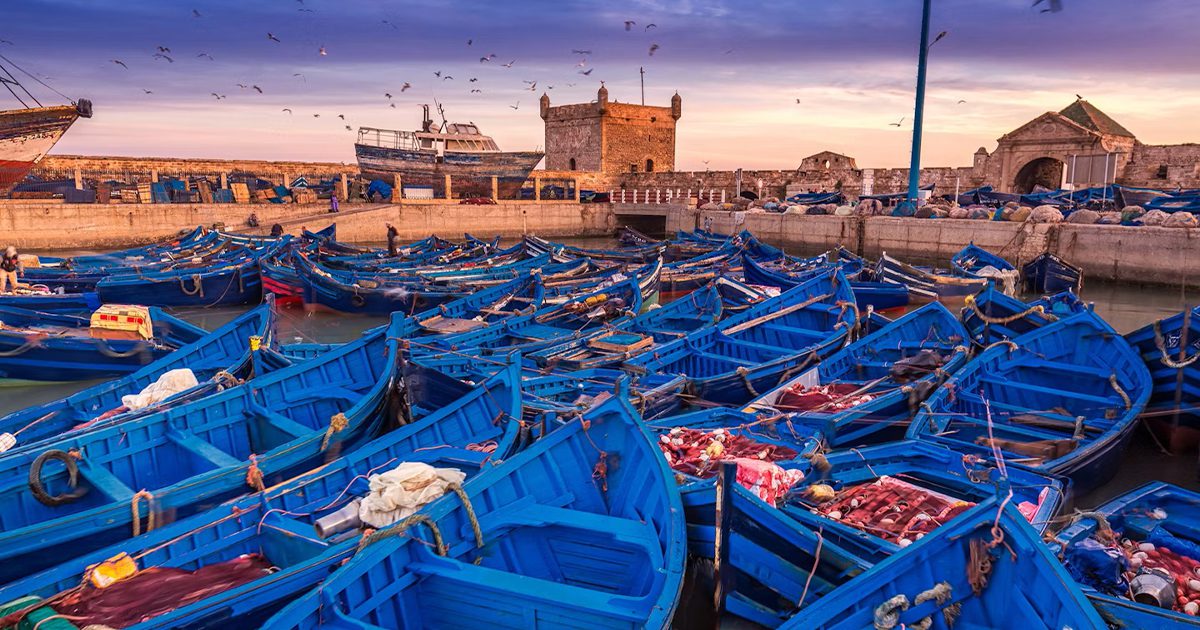
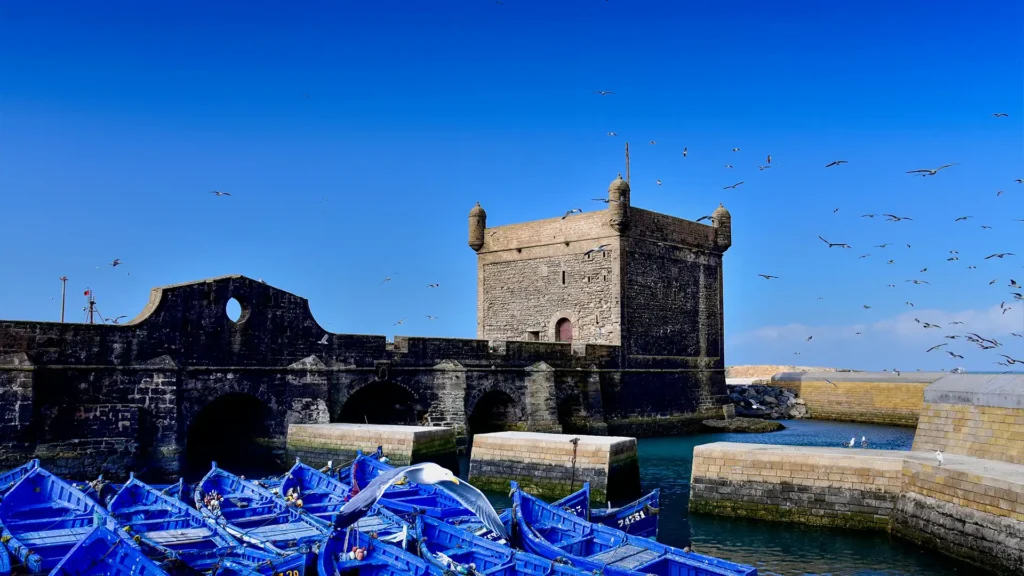
If you only visit one coastal city in Morocco, most travelers and locals will point you to Essaouira. Formerly known as Mogador, this fortified 18th-century port town on the Atlantic coast is known for its whitewashed, blue-shuttered medina (a UNESCO World Heritage Site), a lively fishing port full of blue boats, and a laid-back, artsy atmosphere that’s a world away from Marrakech’s intensity. It’s also one of the best spots in Morocco for surfing and windsurfing thanks to near-constant Atlantic winds. Most visitors do it as a day trip from Marrakech, about 2.5–3 hours away, though it easily deserves an overnight stay if you have the time.
Agadir — Morocco’s Beach Resort City
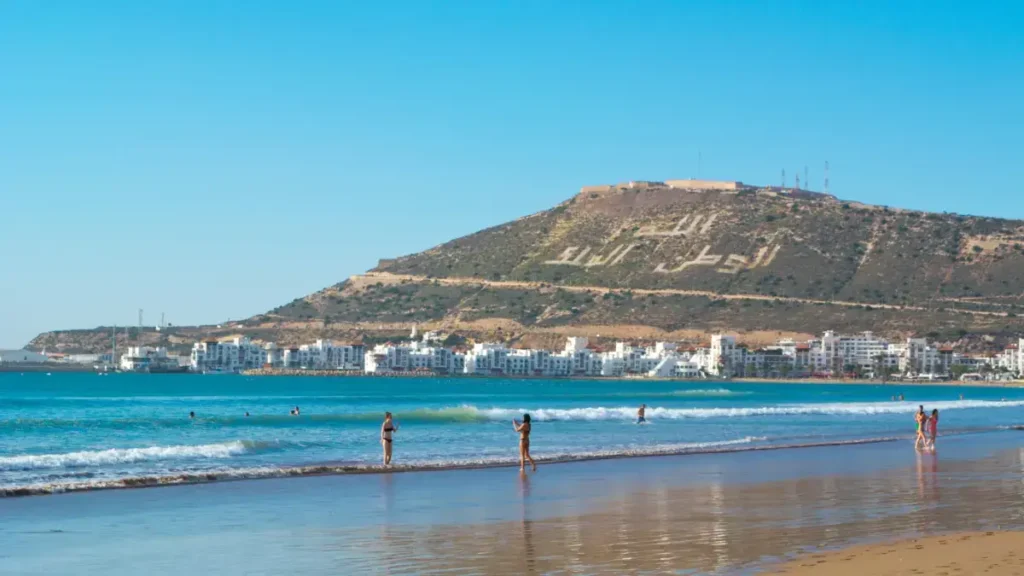
Agadir is Morocco’s answer to a modern beach resort town. Rebuilt after a major earthquake in 1960, it has a completely different feel from the older, historic medinas elsewhere in the country — wide boulevards, long sandy beaches, and a strip of hotels and resorts. It’s less about culture and history, more about sun, beach clubs, and golf courses. If you want a relaxed seaside break with reliable warm weather almost year-round, Agadir is Morocco’s most straightforward choice.
Casablanca — The Modern Coastal Capital
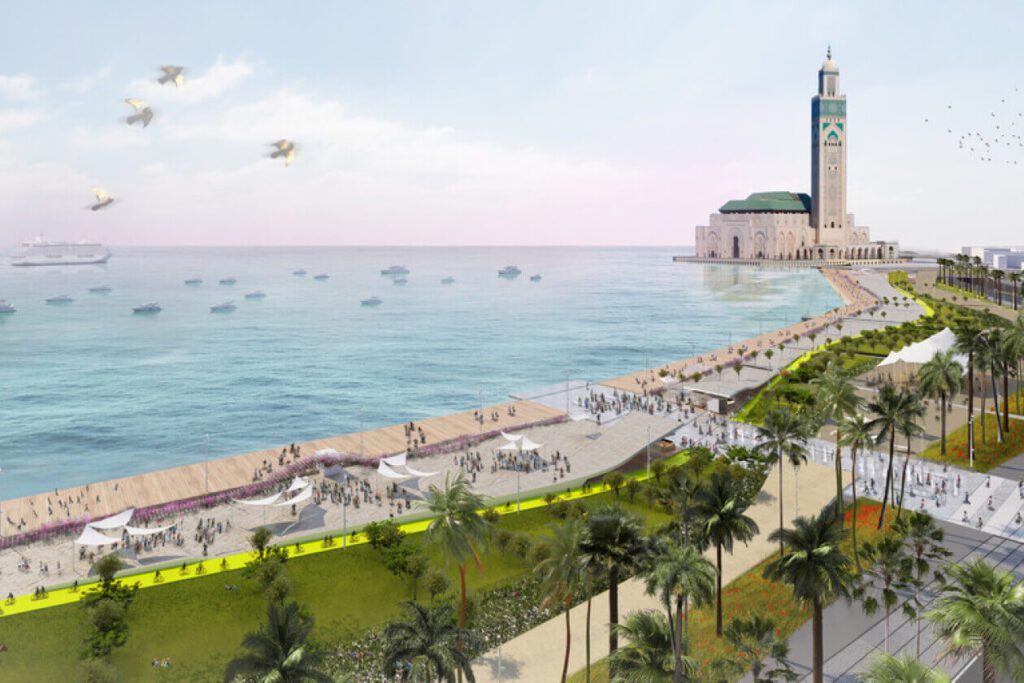
Morocco’s largest city sits directly on the Atlantic and is home to the Hassan II Mosque, one of the few mosques in the country open to non-Muslim visitors, built partly over the ocean itself. Casablanca’s Corniche (beachfront promenade) is where locals spend their weekends, lined with cafés and beach clubs. It’s less “postcard Morocco” and more a real, modern working city — worth a day or two, especially if you’re already landing at its international airport.
Tangier — Where Africa Meets Europe
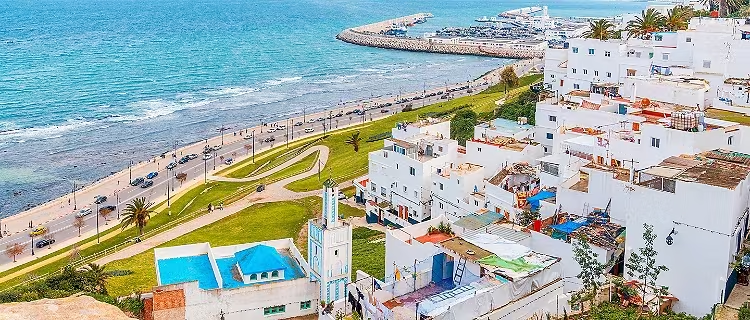
Tangier sits right where the Atlantic meets the Mediterranean, just 14 kilometers from Spain across the Strait of Gibraltar. It has a unique, cosmopolitan history as an “international city” through much of the 20th century, and today mixes a historic kasbah and medina with a modern waterfront. Ferries connect Tangier to Spain in under an hour, making it a genuinely useful gateway between Europe and Africa.
Al Hoceima — The Hidden Mediterranean Gem
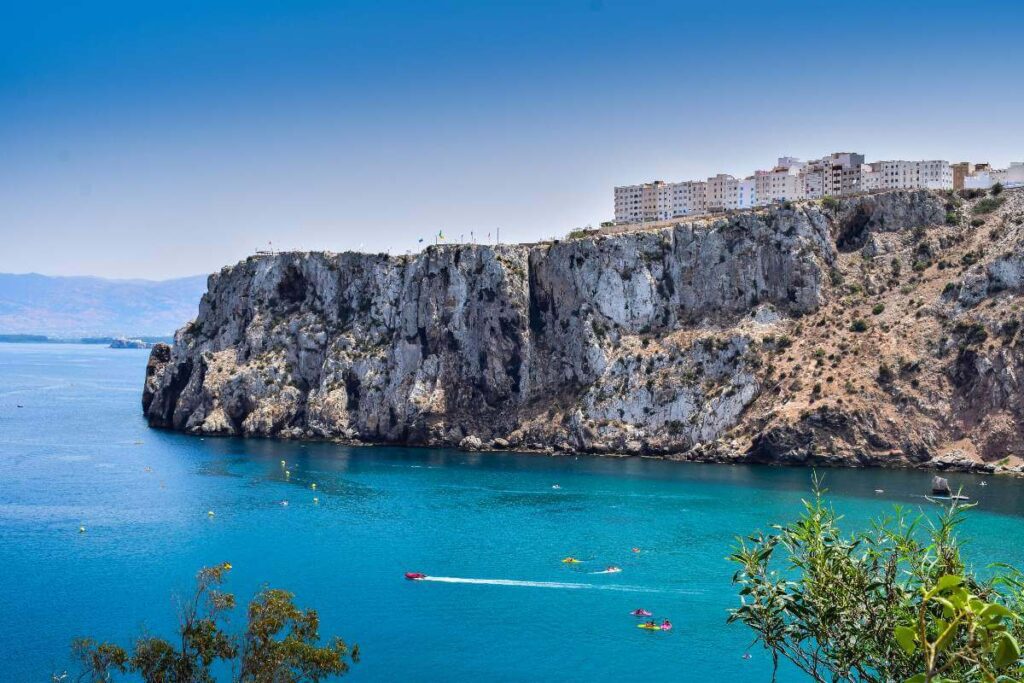
Tucked into Morocco’s northern Rif coastline, Al Hoceima is one of the country’s most underrated coastal cities. Turquoise water, dramatic cliffs, and a national park along the coast give it a Mediterranean island feel with almost none of the tourist crowds found elsewhere. Infrastructure is more limited than in Essaouira or Agadir, which is part of its appeal for travelers looking to get off the beaten path.
Saidia — Morocco’s Quiet Northeastern Beach Town
Near the Algerian border on the Mediterranean coast, Saidia is a newer, purpose-built resort town centered around a long sandy beach and a modern marina. It’s far less known internationally than Morocco’s Atlantic cities, which makes it a good option if you want a quiet beach stay without the crowds — though it does mean fewer flight and transport options to reach it.

For Surfers: Morocco's Best Surf Towns
Beyond the main coastal cities, a handful of smaller towns along the Atlantic coast have built an international reputation purely around surfing, and they come up constantly in any serious search about Morocco’s coast:
Best Surf Towns Along the Coast
Taghazout
Morocco's surf capital, near Agadir
Imsouane
One of Africa's longest right-hand waves
Sidi Kaouki
Quiet, year-round surf near Essaouira
Best Coastal Cities in Morocco — Quick Comparison
| City | Coast | Best For |
|---|---|---|
| Essaouira | Atlantic | Culture, surfing, laid-back medina |
| Agadir | Atlantic | Resort beaches, warm swimmable water |
| Casablanca | Atlantic | Modern city, Hassan II Mosque |
| Tangier | Atlantic / Mediterranean | Gateway to Europe, history |
| Al Hoceima | Mediterranean | Quiet cliffs, turquoise water |
| Saidia | Mediterranean | Quiet resort beach, fewer crowds |
Best Time to Visit Morocco's Coastal Cities
| Season | Months | What to Expect |
|---|---|---|
| Spring (Best) | May – June | Warm, dry, fewer crowds than summer |
| Summer | July – August | Hot, busy beaches, peak season prices |
| Fall (Best) | September | Warm sea, thinner crowds |
| Winter | November – February | Mild but windy Atlantic coast, cooler Mediterranean |
Safety on Morocco's Coast
️ Coastal Safety Tips
- Atlantic waters (Essaouira, Casablanca) have strong currents — check for lifeguard flags before swimming.
- Winds on the Atlantic coast can be strong year-round, which is great for surfing but means cooler water than you'd expect.
- Mediterranean towns like Al Hoceima have far fewer tourist services — book accommodation and transport in advance.
- Keep valuables secured on busy beaches and medinas, especially in Agadir and Tangier during peak season.
- Use official taxis or pre-booked transfers between coastal cities rather than unmarked vehicles.
How to Get Between Morocco's Coastal Cities
Morocco’s coastal cities are well connected by train (particularly Casablanca, Rabat, and Tangier via the ONCF rail network, including the high-speed Al Boraq line), buses (CTM and Supratours are the most reliable), and private transfers for routes not served well by public transport, like Marrakech to Essaouira. If your itinerary includes multiple coastal stops in a short time, a private driver is usually the most efficient option since it removes station transfers and fixed schedules from the equation.
💡 Pro Tip: If you're based in Marrakech, Essaouira is by far the easiest coastal city to add to your trip — it's a straightforward day trip and doesn't require rearranging the rest of your itinerary the way Agadir or Tangier would.
Private Day Trip to Essaouira from Marrakech
Medina, fishing port & fresh seafood on Morocco's Atlantic coast
Frequently Asked Questions
What are the best coastal cities in Morocco?
Essaouira, Agadir, Casablanca, Tangier, Al Hoceima, and Saidia are generally considered Morocco's best coastal cities, spanning both the Atlantic and Mediterranean coastlines.
Is Essaouira or Agadir better for a beach trip?
Agadir is better for a classic resort-style beach holiday with warm, swimmable water. Essaouira is better for surfing, culture, and a more historic, walkable town, though its Atlantic waters are colder and windier.
Which Moroccan coastal city is closest to Marrakech?
Essaouira is the closest major coastal city to Marrakech, roughly 2.5 to 3 hours away by car, and is commonly visited as a day trip.
Is northern Morocco's Mediterranean coast worth visiting?
Yes, especially for travelers who want calmer water and fewer tourists. Al Hoceima and Saidia offer a quieter, more local experience than the more visited Atlantic coastal cities.
What's the best time to visit Morocco's coast?
Late spring (May–June) and early fall (September) generally offer the most comfortable weather across Morocco's coastal cities, avoiding both summer crowds and winter rain.