

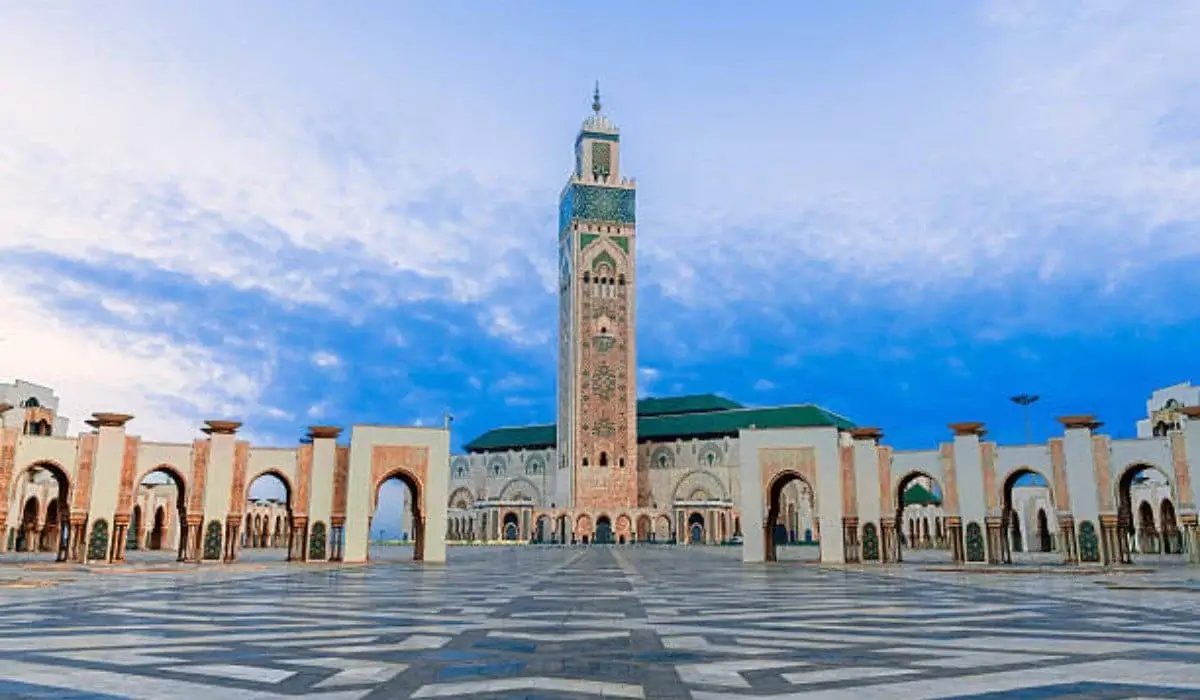
If you’re planning a trip to Morocco, or just curious about the country, one of the first questions people ask is simple: what religion is Morocco? The short answer is Islam — but Morocco’s religious story is more layered than a single number suggests, with a small but historic Jewish community, foreign Christian residents, and a constitution that frames religious identity as central to national life. Here’s a clear, accurate breakdown of Morocco’s religion, its role in daily life, and what it means for you as a visitor.
⚡Respuesta rápida
Islam is Morocco's official religion, practiced by about 99% of the population, mostly Sunni Muslims of the Maliki school. Morocco also has a small, historic Jewish community and a Christian population made up largely of foreign residents.
Morocco's Religious Makeup, at a Glance
Morocco's Population by Religion
Source: CIA World Factbook & U.S. State Department International Religious Freedom Report
Islam in Morocco
Islam is Morocco’s official state religion, and roughly 99% of the population is Muslim, the vast majority following the Sunni branch and specifically the Maliki school of Islamic jurisprudence, one of the four major Sunni legal traditions. Islam arrived in Morocco in the late 7th century and has shaped the country’s laws, architecture, festivals, and daily rhythms ever since.
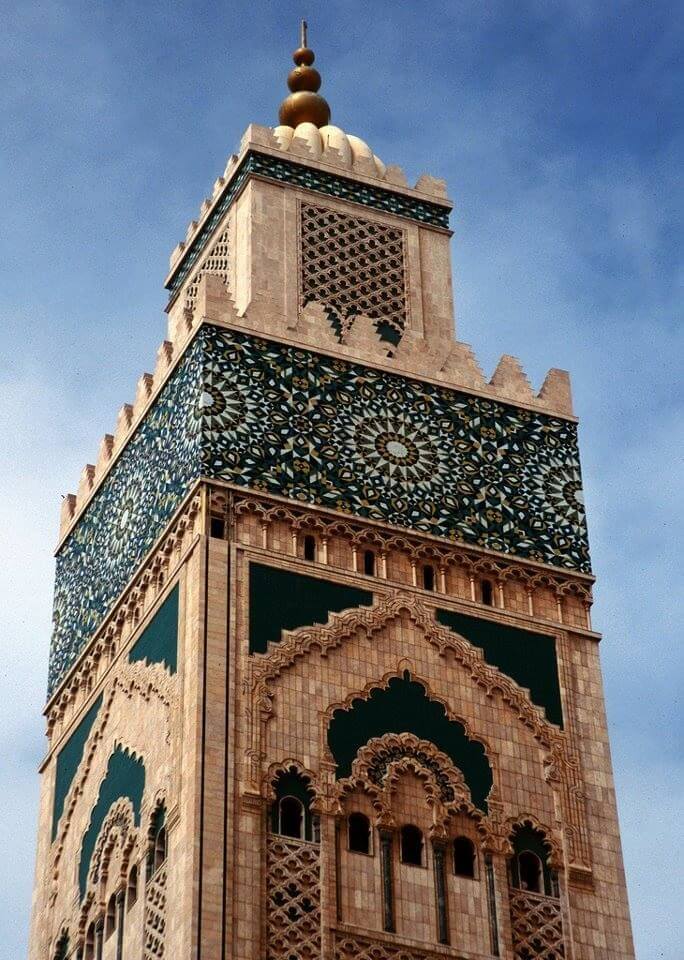
Morocco’s king holds the title Amir al-Mu’minin, or “Commander of the Faithful,” a religious as well as political role that positions the monarchy as the guardian of Islamic practice in the country. You’ll notice Islam’s presence everywhere as a visitor: the call to prayer (adhan) sounding five times a day from minarets across every city, the rhythm of Ramadan reshaping restaurant hours and daily schedules for a month each year, and mosques standing at the center of nearly every neighborhood, from small local prayer rooms to grand landmarks.
Sufism, the mystical tradition within Islam, also has deep roots in Morocco. Sufi brotherhoods (zawiyas) and the shrines of local saints remain active pilgrimage sites, and Sufi music and ritual are woven into Moroccan cultural life well beyond strictly religious contexts.
Religious Minorities in Morocco
While Islam dominates, Morocco has a longer history of religious diversity than most visitors expect.
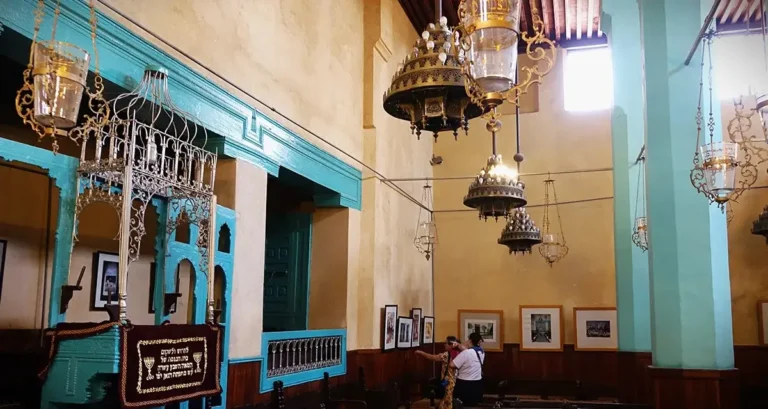
Judaism. Morocco is home to one of the oldest Jewish communities in the world, with roots dating back roughly 2,000 years. At its peak in the mid-20th century, Morocco’s Jewish population numbered in the hundreds of thousands; today, following waves of emigration mainly to Israel and France, an estimated 3,000 to 3,500 Jews remain, most of them in Casablanca. Morocco is still home to the largest Jewish community in the Arab world, and historic mellahs (Jewish quarters) and synagogues remain in Fes, Marrakech, Essaouira, and elsewhere, several of which are open to visitors.
Christianity. Christianity actually predates Islam in Morocco, arriving under Roman rule. Today’s Christian population is small and made up almost entirely of foreign residents, expatriates, and sub-Saharan African migrants and students, rather than Moroccan converts, since proselytizing Muslims is legally restricted. Churches operate openly in major cities including Casablanca, Rabat, and Tangier, primarily serving these foreign congregations.
Other minorities. Smaller communities of Baháʼís and other groups exist, though they face more legal and social restrictions than the historically recognized Muslim and Jewish communities.
Religious Freedom and Legal Context
Morocco’s constitution guarantees freedom of thought, expression, and assembly, and states that the free exercise of religious belief is protected. In practice, this protection is strongest for the country’s constitutionally recognized faiths, Islam and Judaism. Proselytizing on behalf of a religion other than Islam, and actions described in law as “shaking the faith” of a Muslim, are criminal offenses, which is why Morocco’s Christian and Baháʼí communities remain composed mainly of foreign residents rather than converts. Blasphemy against Islam is also a punishable offense under Moroccan law.
Despite these legal restrictions, Morocco is frequently described, including by its own government, as a model of interfaith coexistence in the region, pointing to the continued presence of active synagogues, churches, and a state-protected Jewish cultural heritage alongside its Muslim majority.
What This Means for You as a Traveler
🕌 Visiting Religious Sites: What to Know
- Most mosques are closed to non-Muslim visitors — this is normal and not personal.
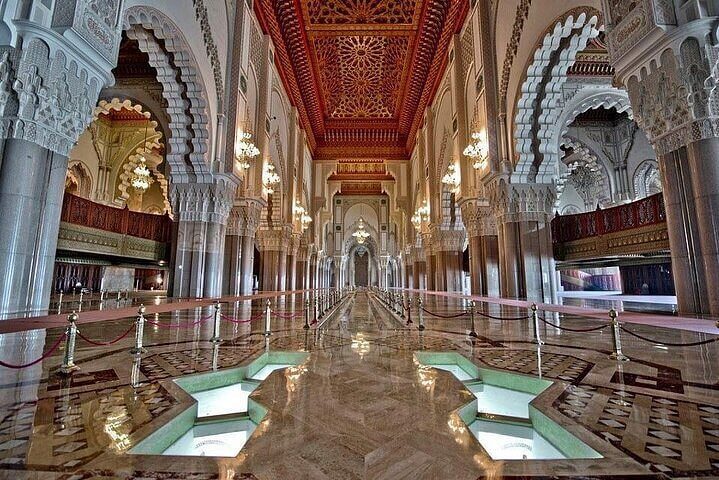
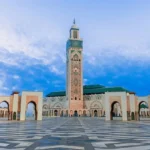
- The Hassan II Mosque in Casablanca is the main exception, with guided tours open to all.
- Dress modestly near mosques and religious sites: shoulders and knees covered.
- Never walk in front of someone who is praying, even outdoors.
- Photography inside religious buildings should always be asked about first.
Most mosques in Morocco are closed to non-Muslim visitors, which differs from the more open policies you might have experienced in some other countries. The major exception is the Hassan II Mosque in Casablanca, one of the only mosques in the country where non-Muslims can join a guided tour of the interior. A handful of historic religious sites, like some zawiyas and former synagogues that are now museums, are also open to the public.
🌙 Traveling During Ramadan: If your trip falls during Ramadan, expect shorter restaurant hours and quieter daytime streets, since most Moroccans fast from sunrise to sunset. As a visitor, you're not expected to fast, but eating or drinking openly in public during the day is considered disrespectful. Evenings, by contrast, come alive after the iftar meal.
💡 Pro Tip: If seeing a mosque interior matters to your trip, build your itinerary around Casablanca specifically — the Hassan II Mosque is genuinely one of the only chances in the entire country to step inside a working mosque as a non-Muslim visitor.
See Morocco's Imperial Cities & the Hassan II Mosque
One of the only mosques in Morocco open to non-Muslim visitors — included on Day 2 in Casablanca
Preguntas frecuentes
What is the main religion in Morocco?
Islam is Morocco's main and official state religion, practiced by approximately 99% of the population, predominantly Sunni Muslims following the Maliki school of Islamic law.
Is Morocco a Muslim country?
Yes. Morocco's constitution establishes Islam as the state religion, and the king holds the religious title "Commander of the Faithful." The vast majority of citizens are Muslim.
Are there other religions in Morocco?
Yes. Morocco has a historic Jewish community of roughly 3,000 to 3,500 people, mostly in Casablanca, along with a small Christian population made up largely of foreign residents, and smaller communities of other faiths.
Can tourists visit mosques in Morocco?
Most active mosques in Morocco are closed to non-Muslim visitors. The Hassan II Mosque in Casablanca is the main exception and offers guided tours for people of all faiths.
Is Morocco religiously tolerant?
Morocco is often cited as relatively tolerant within the region, with a protected Jewish community and open churches for foreign residents, though legal restrictions still apply to proselytizing on behalf of religions other than Islam.

 EN
EN FR
FR ES
ES IT
IT